Your B2B Resource for Custom Label Printing Solutions
Prop 65 Warning Labels: What California Businesses Need to Know
Prop 65 labeling requirements catch a lot of businesses off guard — not because the law is obscure, but because it applies more broadly than most people expect. If you sell products in California, Prop 65 applies to you regardless of where your business is located....
Clear BOPP vs White BOPP: Which One Fits Your Packaging?
BOPP labels — made from biaxially oriented polypropylene — are the most widely used film substrate in label printing, and for good reason. They're moisture resistant, tear resistant, and durable in ways paper simply can't match. But BOPP labels come in two distinct...
Cryogenic Labels: How to Ensure Durability at Sub-Zero Temperatures
Introduction Cryogenic labels are engineered for one of the most demanding conditions a label can face: deep freeze storage where standard materials crack, peel, and lose adhesion entirely. Most label failures are gradual — edges lift, print fades, adhesive softens....
The Complete Guide to Label Substrates: From Paper to BOPP to Cryo
Introduction The substrate is the foundation of every label. It determines whether the label survives a freezer or fails at the first sign of moisture, whether it holds a barcode through a warehouse environment or smears on contact with a cleaning agent, whether it...
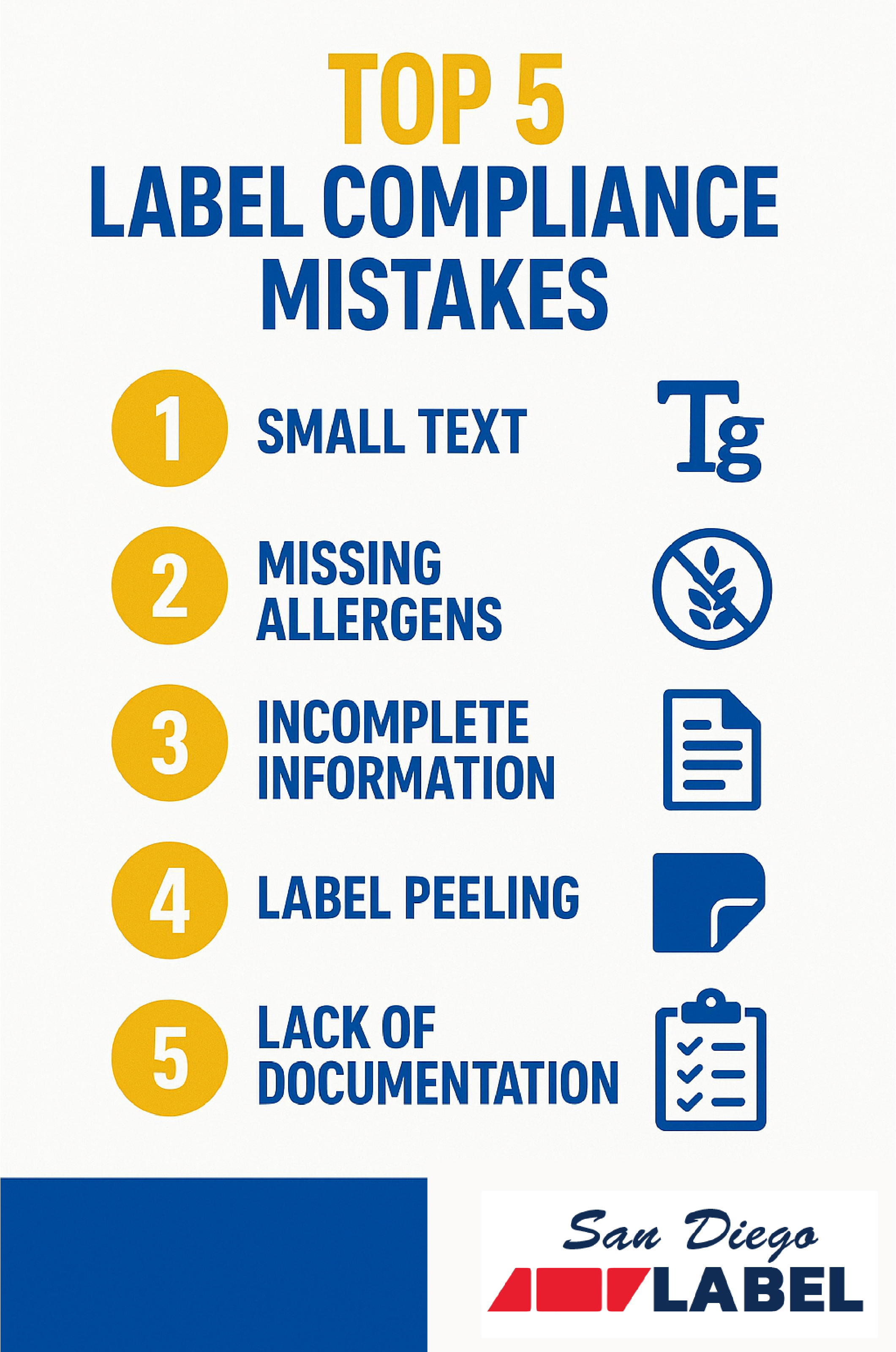
5 Common Label Compliance Mistakes That Cost Businesses Thousands
Intro Most companies don’t lose money because of poor design — they lose it because of label compliance mistakes. The wrong font size, a missing allergen, or a label that fails in storage can trigger recalls, wasted packaging, or even lawsuits. In this article, we’ll...
Durable & Industrial Labels: How to Stay Compliant in Harsh Environments
Introduction Most label problems don't show up right away. A label that looks fine when it's applied can peel in a freezer, smear after solvent contact, or fade after a few months of UV exposure — and by the time that happens, the product is already in the field. In...
Pharma & Biotech Labeling: Lot Numbers, Barcodes & Serialization
Pharma and Biotech Labeling: What Compliance Actually Requires Introduction In pharma and biotech labeling, the margin for error is essentially zero. A label that fails in cold storage, carries an unreadable barcode, or ships without a required tamper-evident feature...
FDA Requirements for Food Packaging Labels Explained
Introduction For any food brand selling in the United States, FDA compliance isn't optional — it's the baseline. The FDA sets specific requirements for how food products have to be labeled, and missing even one of them can put your product at risk of being pulled from...
The Business Owner’s Guide to Product Label Compliance: FDA, Labs, and Beyond
The Business Owner's Guide to Product Label Compliance: FDA, Pharma, and Beyond Introduction If you're new to selling a physical product, label compliance probably wasn't the first thing on your radar. You were focused on the product itself, the packaging, the...