Intro
If you sell products in California, understanding Prop 65 labeling requirements is essential. The law demands clear warnings for products that may expose consumers to chemicals linked to cancer, birth defects, or reproductive harm. Missing these warnings can lead to lawsuits, fines, and products being pulled from shelves.
In this guide, we’ll explain what Prop 65 means, how labels must appear, and the most common compliance mistakes to avoid.
What is Prop 65?
Prop 65 labeling requirements come from the Safe Drinking Water and Toxic Enforcement Act of 1986. It requires warnings for any product that contains one or more of over 900 listed chemicals. The law applies across industries — from food and cosmetics to furniture, consumer goods, and electronics.
Even trace levels of a listed chemical can trigger a labeling requirement.
👉 For a broader look at compliance overall, see our Complete Guide to Product Label Compliance.
Font Size, Placement, and Wording in Prop 65 Labels
Prop 65 labeling rules are strict and precise:
-
Font size: Must be at least as large as other consumer information on the package.
-
Placement: Must be clearly visible at the point of purchase.
-
Wording: “Safe harbor” text must match the state’s approved language exactly.
If you shrink the font, change the wording, or hide the label, it no longer meets Prop 65 labeling requirements.
For official state details, visit the (California Office of Environmental Health Hazard Assessment – Prop 65)
Examples of Prop 65 Warnings
For example:
-
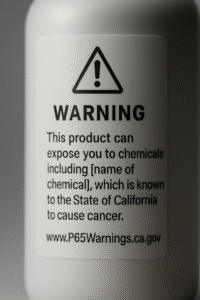
Consumer goods: “⚠️ WARNING: This product can expose you to [chemical], which is known to the State of California to cause cancer.”
-
Food & beverage: Special rules apply for alcohol, acrylamide, and other food-based risks.
As a result, businesses must adjust their labels carefully based on product category.
Common Mistakes Businesses Make
Common Mistakes Businesses Make with Prop 65 Labeling Requirements
Many companies fail compliance for reasons beyond the wording. Some frequent mistakes include:
-
Using text that doesn’t match “safe harbor” wording.
-
Printing warnings too small to read.
-
Hiding warnings under flaps or on back panels.
-
Forgetting online sales — Prop 65 rules also apply to e-commerce listings.
Each of these errors can result in fines or lawsuits under Prop 65 labeling requirements.
Why Prop 65 Matters
Finally, it’s important to understand why Prop 65 matters so much. Even businesses outside California are affected if they sell into the state. With lawsuits being a common enforcement method, Prop 65 compliance protects your business from costly legal action.
Final Thoughts
To sum up, Prop 65 labeling is about protecting both consumers and businesses. By making sure your labels use the right language, size, and placement, you can stay compliant and focus on growth.
👉 At San Diego Label, we help California businesses apply Prop 65 correctly — so you avoid lawsuits and keep your products on shelves.